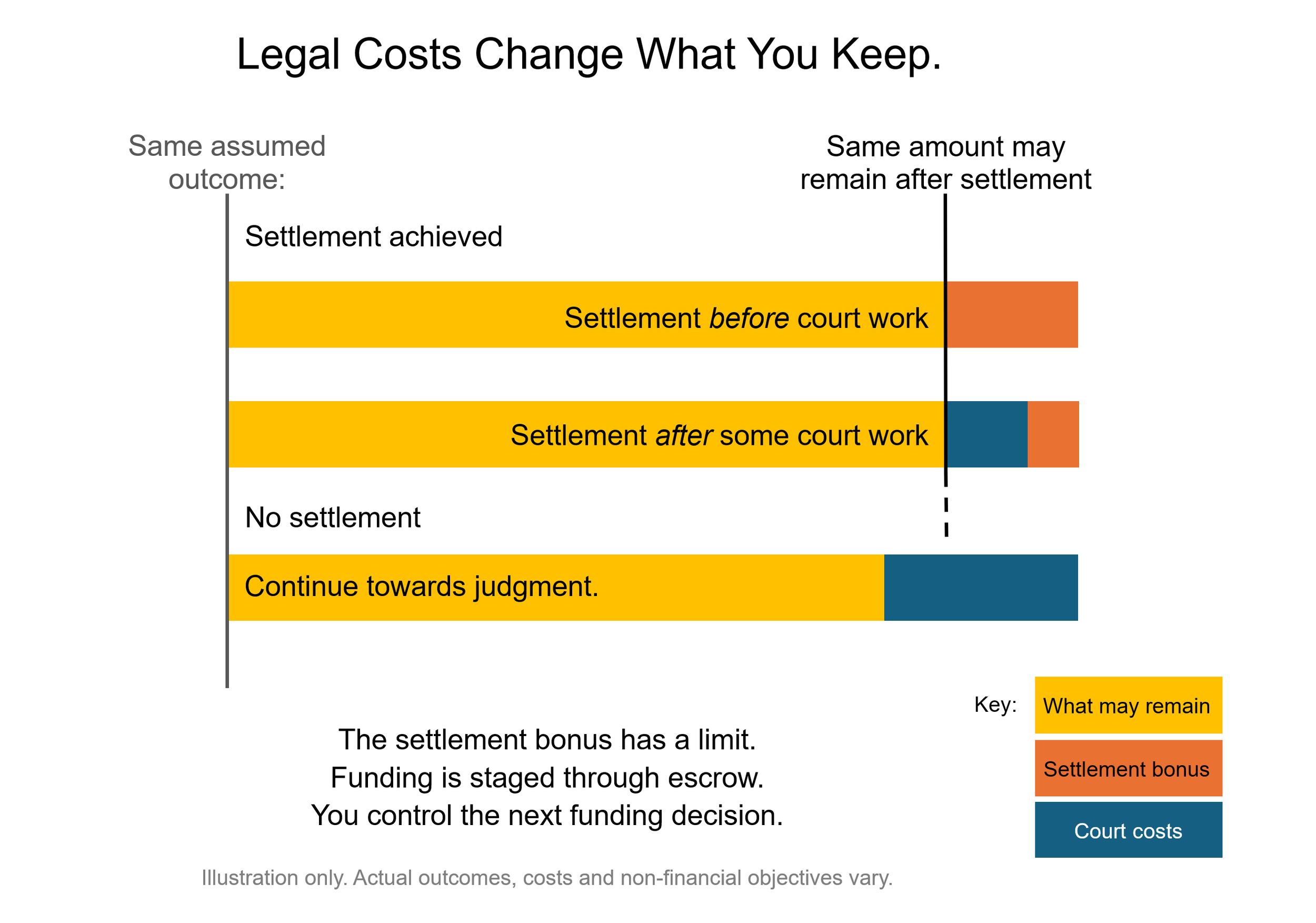
Two independent lawyers.
One funded path,

Settlement and trial work sit in separate roles.
You fund only the path your matter takes.

Clean Law operates in the settlement and cost-safety lane.
A separately retained courtroom lawyer conducts advocacy if trial becomes necessary.

Aligned incentives.
Stage-based funding.
Client authority preserved.

Why two lawyers often cost less than one

How the two-lawyer model works

The Structural Issue Most Clients Never See

In most litigation, settlement work and trial preparation are performed within one blended role.

This is not duplication.
It is structure.

When both paths sit inside one billing framework, timing and scope can become difficult to see, particularly in early stages.

Clean Law separates those roles.

We do not conduct trial preparation.
We focus on:

negotiation and mediation

  • timing and strategy

  • stage-based cost oversight

  • escrow control

The courtroom lawyer focuses exclusively on:

  • pleadings

  • evidence

  • contested hearings

  • advocacy

Each role remains independent.
You fund one path at a time.

How Incentives Stay Aligned

Clean Law charges:

  • a fixed fee for settlement and escrow oversight

  • a results-based bonus only when early resolution avoids substantial trial costs

We do not take percentages of damages.
We do not receive referral fees.
We do not share profits with courtroom firms.

If early settlement avoids heavy trial costs, we succeed.
If a matter drags, our fixed fee does not increase.

This alignment is structural, not promotional.

Three Structural Client Protections

Separation of Roles

One lawyer handles settlement and cost safety.
One lawyer handles trial advocacy.

The roles do not blend.

Escrow Authority

Your funds remain in escrow.
No stage begins and no funds move without your written approval.

Each stage is defined.
Completed work is paid.
Unearned funds remain yours.

Independent Tendering

Clean Law prepares one client-side case analysis.
Courtroom firms on your shortlist respond independently.

No panels.
No commissions.
No influence.

You compare strategy, timing and cost on equal footing.

When This Model Is Most Useful

  • Commercial disputes

  • Business or shareholder conflicts

  • Building or strata matters

  • Other civil litigation where cost escalation risk is significant

Clean Law does not act in contested hearings.
Courtroom advocacy remains fully independent.

Why Clean Law Exists

Clean Law was created to make cost control, timing control and lawyer independence visible in structure, not merely in assurances.

Two independent roles.
Client-controlled funding.
Audit-governed safeguards.

Why Two Lawyers Often Cost Less Than One

Smart Discovery Package