

Home > Resources > Public Paper Series > Disclosure Is Not Control Series > Why Cost Disclosure Does Not Always Give ControlWhy Cost Disclosure Does Not Always Give Control
Disclosure Is Not Control Series
Version 1.0 | June 2026
Download Paper 4a (PDF)
← Back to Public Paper Series
Cost disclosure is important. It helps people understand how legal costs may arise.
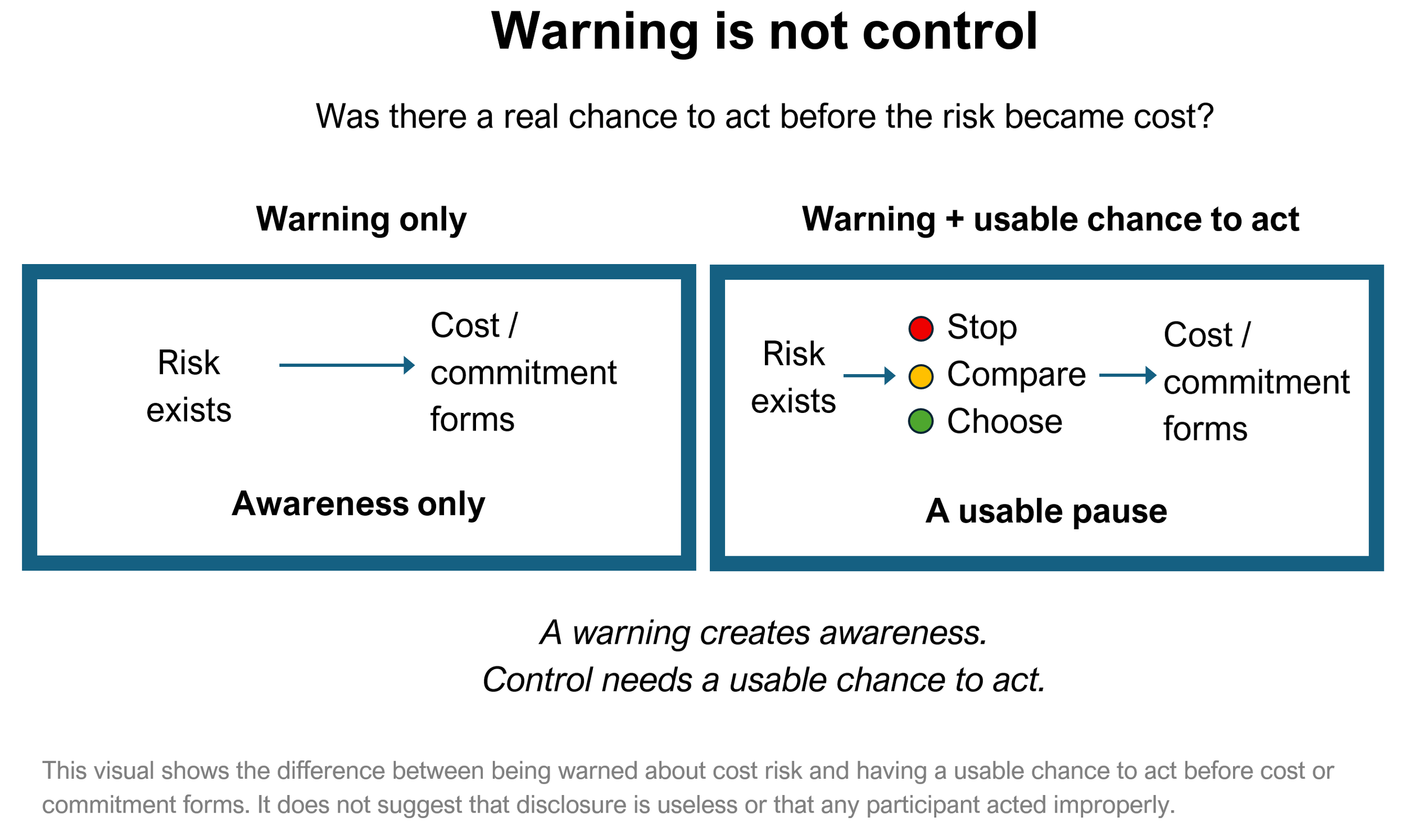
But receiving a costs agreement or estimate is not the same as having practical control over legal costs as a dispute develops.
This paper explains why cost disclosure and practical control are different, and why timing, authority, scope and decision points may matter just as much as the information provided at the beginning.
Overview
Most people expect that being told about legal costs will help them stay in control.
This paper explains why disclosure and practical control perform different functions.
It explores how costs may continue to develop through changing circumstances, expanding scope and later decisions, even where proper disclosure has been provided.
Rather than asking only whether a client was warned, the paper asks a different practical question:
Could the client still make meaningful decisions before further cost was created?
Who should read this?
This paper may be useful if you are:
considering civil litigation
reviewing a costs agreement
deciding whether to approve further legal work
advising clients, businesses or strata schemes
interested in how litigation costs develop over time.
Companion Papers
Continue through the series:
Being Warned Is Not Being Protected (Paper 4b)
A Right to Stop Is Not a Stopping Point (Paper 4c)
Or explore earlier papers in the Public Paper Series.